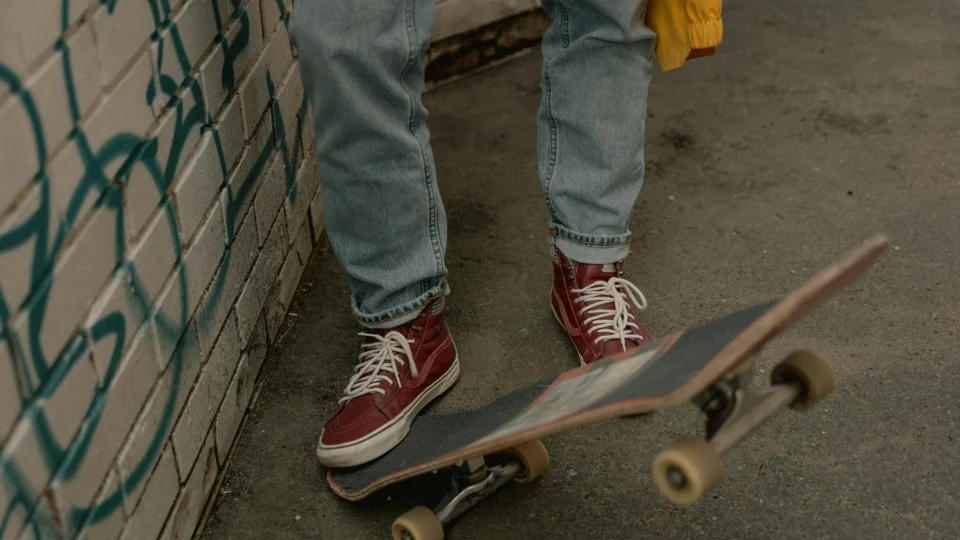
品牌史志05/25/2026, 08:08:56 AMSupreme: How a Skater's Inventory Problem Became Fashion's Most Copied Business ModelIn 1994, James Jebbia opened a skate shop on Lafayette Street with no money for inventory. He couldn't keep the shelves full, so he ordered less, sold out, and made something different next week. That cash-flow constraint became the drop model — and 30 years later, the brand it built has changed hands three times, shed $600 million in its last sale, and left the entire fashion industry trying to reverse-engineer something that was never designed to be copied.
品牌史志05/24/2026, 08:07:12 AMMuji: The Supermarket Private Label That Turned "No-Brand" Into a Global IdentityIn 1980, a Japanese supermarket launched a product line built on selling what other companies threw away — U-shaped pasta ends, shiitake mushroom stems — wrapped in unbleached paper with the slogan "lower priced for a reason." The line was called Mujirushi Ryōhin: no-brand quality goods. Forty-five years later, the company that spun off from that supermarket posted $5 billion in annual revenue. This is how Muji happened.
品牌史志05/23/2026, 08:04:03 AMLevi's: The Tailor from Reno Invented the Jeans. The Merchant from San Francisco Got the Brand.In 1872, a tailor named Jacob Davis invented the copper-riveted pant and couldn't afford the patent. His dry-goods supplier Levi Strauss funded the filing, built the factory, and put his name on the company. Over the next 150 years: two stints as a public company, a $1.6 billion leveraged buyout, a decade of decline from $7.1B to $4B in revenue, and a turnaround that started with firing nine of eleven executives. This is how Levi's happened.
品牌史志05/22/2026, 08:08:59 AMPatagonia: How a Blacksmith Who Hated Business Built a $1.5B Brand — Then Gave It AwayIn 1957, Yvon Chouinard was making pitons in his parents' backyard and selling them for $1.50. In 2022, he gave away a $3 billion company because he couldn't find a better way to protect it. In between: the piton-to-chock pivot that cost 70% of revenue, the 1991 layoffs that rewrote the growth model, the organic cotton switch before any law required it, and the ad telling customers not to buy the jacket. This is how Patagonia happened.
品牌史志05/21/2026, 08:04:23 AMIKEA: How a Teenage Entrepreneur's Match-Selling Side Hustle Became the World's Largest Furniture EmpireIn 1943, a 17-year-old in rural Sweden used his father's school reward to register a mail-order company. The flat-pack format was invented by accident in 1956. The founder spent decades concealing his Nazi past. And the entire enterprise now sits inside a Dutch charitable foundation that no one owns, cannot be acquired, and pays almost no taxes. This is how IKEA happened.
品牌史志05/20/2026, 06:02:32 PMAcne Studios: How 100 Pairs of Jeans Built a Half-Billion-Dollar BrandIn 1997, Jonny Johansson gave away 100 pairs of raw denim jeans with red stitching. He didn't intend to launch a brand. Three decades later, Acne Studios is a Stockholm-based luxury house with $221M in annual revenue — and still majority-owned by its founder. This is how that happened.